How the Church Reads Scripture
A spotlight drawn from THE101: Introduction to Sacred Scripture, a core course at Saint Michael’s Catholic College
Every Catholic has lived this moment. You open the Bible alone, meaning well, and within a page you are lost — a genealogy that runs on like a river, a psalm crying out for vengeance, a vision in Revelation that reads like a fever dream. You close the book quietly and conclude that Scripture is for scholars. It is not. But the Church has always insisted on one thing: this book was never meant to be read alone. It was written in the Church, gathered by the Church, and it is read best in the Church — the way a letter from home is read best at the family table.
The Church begins with what scholars call the literal sense, and it is simply honesty about what is on the page. Before we ask what a passage means for us, we ask what the human author, in his own time, actually said. A parable is not a police report. Poetry is not prose. Genesis proclaims truth in the language of its age, and a lament psalm pours out a heart rather than drafting a theology. In THE101 we slow students down at exactly this point: identify the kind of writing in front of you before you decide what it means. Most bad readings of Scripture are not rebellious. They are just hurried.
But the literal sense is the floor, not the ceiling. Because God is the author of the whole, the Church also reads with the spiritual senses. Some passages point beyond themselves to Christ and His Church. Some speak directly to how we are to live. Some turn our eyes toward the end of all things and the hope that waits there. These senses never float free of the literal one; they build on it, the way a house builds on its foundation. And standing behind the whole reading is a conviction the course returns to again and again: Scripture and Tradition are not two rival streams but one — the same Gospel, written and handed on, guarded by the same Spirit.
This is also why the Bible sits at the center of the Church's prayer and not only her classrooms. The monk in his choir stall at vigils, the mother reading a psalm over a sick child, the priest proclaiming the Gospel at dawn Mass — all of them are doing what our Benedictine fathers called lectio divina: reading slowly, chewing the words, letting the text read us. Saint Benedict built whole days around that slow reading. The goal was never to master the book. The goal was to be mastered by it.
So here is a small practice for this week. Take one Gospel passage — the shorter, the better. Read it aloud, twice, slowly. Ask first what it meant in its own day, to the people who heard it from the Lord's own mouth. Then ask what it asks of you, now, in your actual kitchen and your actual week. Then bring it to Mass on Sunday and hear how the Church hears it, surrounded by the creed and the prayers and the people of God. You will find it is the same passage, and not the same at all.
Study with Saint Michael's
THE101: Introduction to Sacred Scripture follows this way of reading across sixteen modules — revelation and the formation of the canon, the Old Testament from creation to the prophets, the Gospels and the letters, and Scripture in the life of the Church — for 3.0 undergraduate credits, $450 with payment plans, entirely online with twelve months of access from enrollment. See the course and enroll here: https://the101.archsh.org/the101-9924
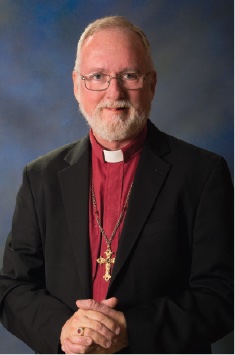
His Beatitude Sean Alexander, DD, OCB
Presiding Archbishop, Archdiocese of the Sacred Heart
His Beatitude Sean Alexander, DD, OCB · Presiding Archbishop, Archdiocese of the Sacred Heart · (813) 797-6797 · [email protected] · archsh.org
Follow the Archdiocese of the Sacred Heart on Facebook for weekly reflections, prayers, and news from the archdiocese.
